Fatal Tractor-Trailer Accidents in North Carolina: A Growing Crisis
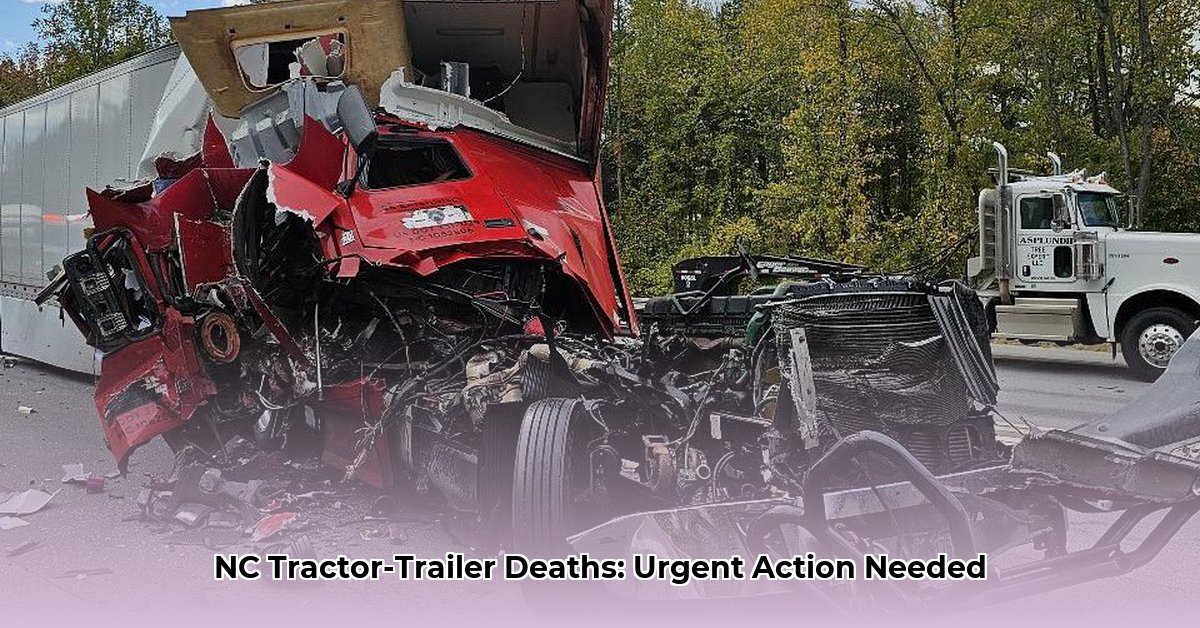
Recent devastating crashes on North Carolina's interstates, particularly I-95 and I-73, have tragically highlighted a surge in fatal accidents involving tractor-trailers. For more information on recent I-95 accidents, see this report. These incidents, far from isolated occurrences, underscore a critical highway safety issue demanding immediate and comprehensive action. The human cost is staggering, demanding a multifaceted approach to prevent future tragedies.
The Devastating Toll: Beyond the Statistics
At least six fatalities resulted from two separate accidents, one on I-95 and another on I-73. The I-95 crash alone claimed five lives in a collision directly involving a large truck. While details regarding the I-73 incident are still unfolding, the confirmed fatality further emphasizes the severity of the problem. These aren't mere statistics; they represent families grieving profound loss and communities grappling with immense sorrow. This human element demands we prioritize solutions. What specific measures can effectively reduce these occurrences?
Investigating the Causes: A Complex Equation
The I-95 crash resulted in charges against the truck driver, suggesting driver error played a significant role. However, a thorough investigation is crucial to determine whether fatigue, distraction, mechanical failure, or a combination of factors contributed. Similarly, the I-73 accident necessitates detailed analysis to ascertain its root causes. Were the contributing factors similar? Is there a potential link between these two incidents, highlighting systemic weaknesses? These questions demand answers.
The Impact on Families: A Lasting Legacy of Grief
The emotional toll on the families of the victims is immeasurable, extending far beyond the immediate aftermath. They contend not only with the devastating loss but also with the long-term emotional and practical consequences. Remembering the human cost is crucial in driving change. Their experiences underscore the urgent need for comprehensive safety reforms.
Shared Responsibility: Stakeholders in Highway Safety
Improving highway safety requires a unified effort from various stakeholders:
| Stakeholder | Role |
|---|---|
| North Carolina Department of Transportation (NCDOT) | Responsible for highway infrastructure, including road design, maintenance, and implementing safety initiatives. |
| North Carolina State Highway Patrol | Enforces traffic laws, patrols highways, investigates accidents, and identifies areas needing improvement. |
| Trucking Companies | Must prioritize driver training, proper vehicle maintenance, and investment in safety technologies. |
| Federal Motor Carrier Safety Administration (FMCSA) | Sets national safety standards for trucking, conducts investigations, and provides guidance to states. |
| Families of Victims | Often become powerful advocates for change, pushing for better safety measures to prevent future tragedies. |
Charting a Course Forward: Actionable Solutions
Addressing this crisis requires a two-pronged approach encompassing immediate actions and long-term strategies. Short-term measures include stricter enforcement of existing regulations, increased highway patrols in high-risk zones, and public awareness campaigns educating drivers about safe practices. Long-term solutions necessitate significant investment in upgrading highway infrastructure, mandating advanced driver-assistance systems (ADAS) in commercial vehicles, and fostering a proactive safety culture within the trucking industry. Further research into driver fatigue, distraction, technology for accident prevention, and safer road design is paramount.
Immediate Actions:
Increased Highway Patrols: Deploy additional patrols in high-risk areas (I-95, I-73) to actively enforce speed limits and driver behavior. Efficacy metric: A 15% reduction in speeding violations within six months.
Public Awareness Campaign: Launch a targeted public awareness campaign emphasizing safe driving practices around large trucks. Efficacy metric: A 10% increase in public awareness of truck blind zones within three months.
Long-Term Strategies:
Infrastructure Improvements: Invest in upgrading highway infrastructure, including improved signage, clearer lane markings, and better road design in accident-prone areas. Efficacy metric: A 20% reduction in accidents in targeted areas within two years.
Mandatory ADAS: Mandate the installation of advanced driver-assistance systems (ADAS), such as automatic emergency braking and lane departure warning systems, in all commercial vehicles. Efficacy metric: A 10% reduction in accidents involving driver error within three years.
Enhanced Driver Training: Implement stricter driver training programs and mandatory refresher courses emphasizing defensive driving techniques, fatigue management, and blind spot awareness. Efficacy metric: A 5% reduction in reported driver fatigue incidents within one year.
A Call to Action: Preventing Future Tragedies
The recent fatal accidents in North Carolina serve as a stark reminder of the urgent need for proactive measures. The current situation is unacceptable; we must act decisively to prevent further preventable tragedies. Stronger regulations, enhanced training, improved vehicle maintenance, and investment in new technologies are not merely options but necessities. We owe it to those lost and their families to make our highways safer for everyone.